

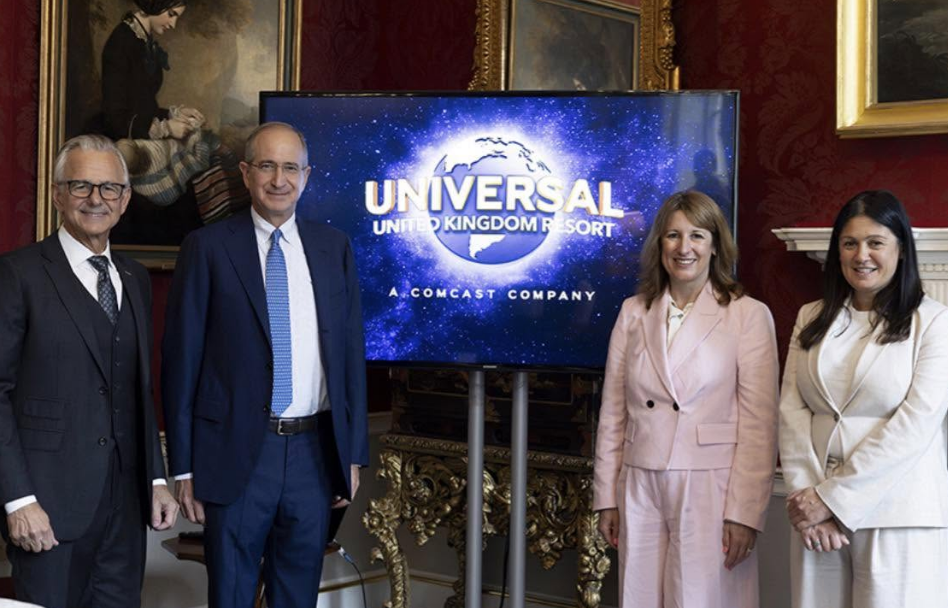
A new Universal theme park and resort in Bedfordshire, scheduled to open in 2031, is expected to create 28,000 jobs and contribute nearly £50 billion to the UK economy by 2055, according to estimates from the government and Comcast NBCUniversal.
Comcast NBCUniversal, the media giant behind the project, will invest over £5 billion during the five-year construction phase. This investment is supported by a £1.3 billion government package aimed at upgrading local transport infrastructure, including improvements to the A421 road and the Wixams railway station.
Chancellor Rachel Reeves and Culture Secretary Lisa Nandy have both praised the development, highlighting it as a significant boost to UK employment and the entertainment sector.
Massive Job Creation
The Universal United Kingdom Resort is expected to generate around 20,000 construction jobs throughout its building phase and create 8,000 permanent roles once operational. Employment opportunities will cover sectors such as hospitality, technology, construction, and creative industries. Approximately 80% of the workforce is anticipated to be recruited from Bedfordshire and surrounding areas.
£50 Billion Economic Impact
Officials estimate the resort will unlock nearly £50 billion in economic growth by 2055. Positioned to become the UK’s leading visitor attraction, it is expected to attract millions of visitors each year, including over one million international tourists.
Government Backing
The government’s £1.3 billion investment will fund critical infrastructure upgrades to support both local residents and the anticipated increase in tourism. Key projects include enhancements to the A421 road and improvements at Wixams railway station.
During a site visit, Chancellor Rachel Reeves emphasised the project’s importance to the region’s development.
Boost For UK Entertainment
Culture Secretary Lisa Nandy described the Universal UK Resort as “a huge vote of confidence in the UK,” highlighting its potential to strengthen the country’s entertainment and creative industries through substantial private and public sector investment.
Originally published by UKNIP.