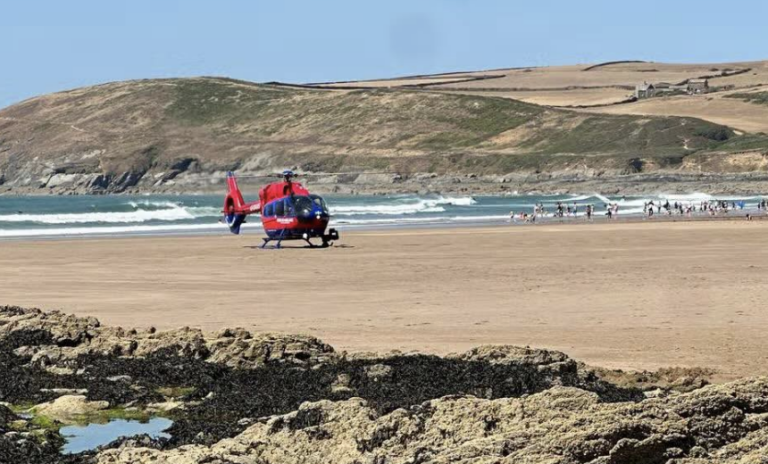

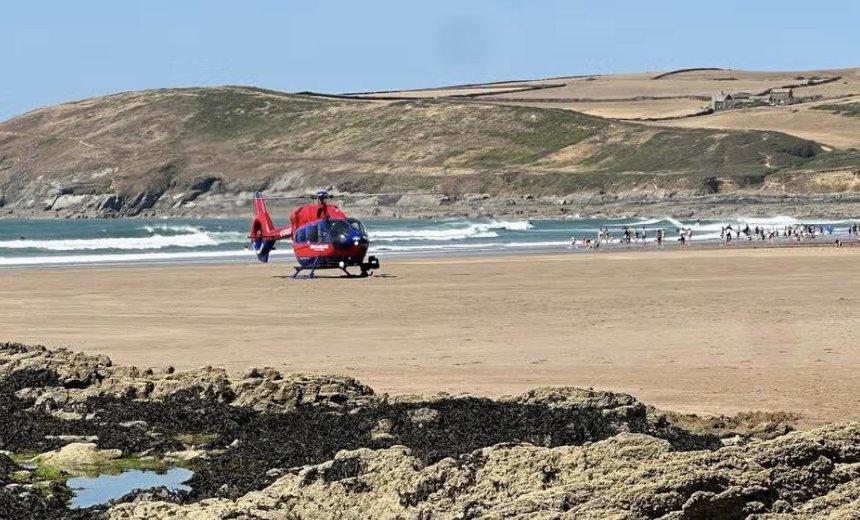
A man has died following a major emergency response at Croyde Beach in North Devon despite desperate efforts to save his life. Emergency services rushed to the popular beach on Wednesday following a serious incident involving the man. RNLI lifeguards and other emergency responders battled to save him as shocked holidaymakers and families watched the rescue operation unfold. Despite their efforts, the man died. A significant emergency response was reported at the beach, with the RNLI, Coastguard and Devon Air Ambulance among the services said to have attended. Witnesses have described heartbreaking scenes as rescuers worked on the casualty.
One person who witnessed the incident paid tribute to the emergency crews and lifeguards who continued protecting hundreds of people on the busy beach following the tragedy. They said: “After witnessing the tragic incident today on Croyde Beach, my heart goes out to the family who lost their loved one today.
“We are so, so lucky to have such amazing emergency services.
“The lifeguards at Croyde should be extremely proud, maintaining such a busy beach, keeping the public safe and out of the water due to how strong the waves were and carrying on after such tragedy.
“I hope you all see this post. You should be so proud of yourselves. I’m proud of you and everyone on that beach today. “Sending so much love to the dear family who lost their loved one.” The witness described watching the attempts to save the man’s life as “gut wrenching”. Conditions at Croyde were reported to have been challenging, with strong waves and lifeguards working to keep beachgoers safe and prevent people entering potentially dangerous areas of the water. Croyde is one of North Devon’s busiest surfing beaches and is patrolled by RNLI lifeguards during the summer season. The identity of the man has not yet been released. Further details surrounding the circumstances of his death are expected to be released by emergency services. This is a developing story and will be updated as more information becomes available.
Originally published by UKNIP.