

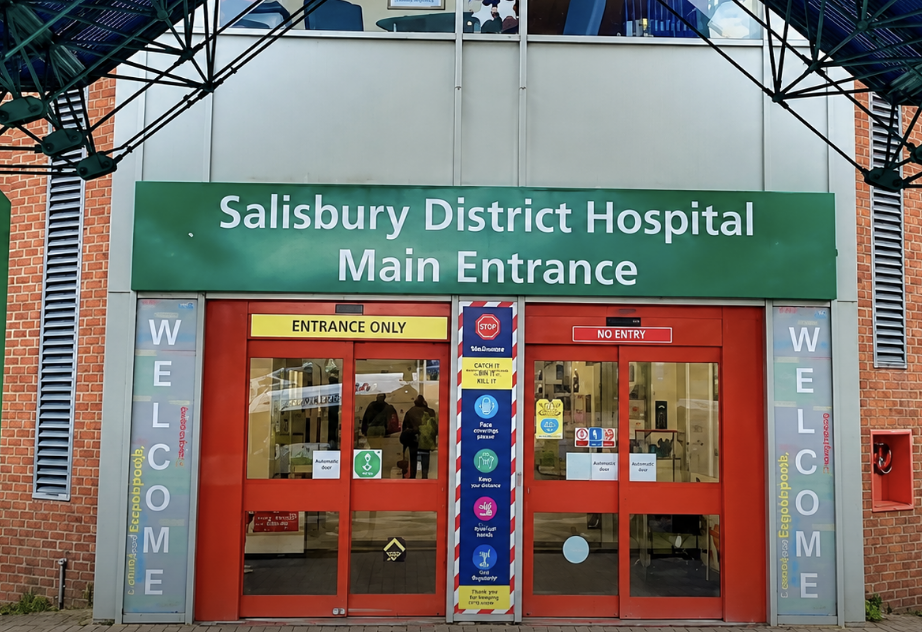
The family of a woman now suffering from advanced gallbladder cancer is demanding answers over what it describes as serious failings in her treatment at salisbury/">Salisbury District Hospital, where Miss Amanda Bond and Mr James Ward were among the doctors involved in her care. Maria Jackson’s family says doctors discussed her need for surgery and that she was regarded as a Priority 2 patient, but they were told there was no capacity for her operation. Months passed before an operation was eventually attempted elsewhere. By the time Maria’s condition was ultimately investigated through specialist services in Southampton, she was diagnosed with advanced gallbladder cancer. Her family is now asking whether the delays cost her the opportunity for the disease to be detected and treated at an earlier stage. No independent expert has yet concluded that either Miss Bond, Mr Ward or Salisbury District Hospital was negligent, and the complete hospital records — including waiting-list and multidisciplinary team documents — are still being sought. But the medical history already available reveals a troubling sequence of delays and unanswered questions.
Maria Arrived at Salisbury With Weight Loss, Pain and a Perforated Gallbladder
Maria was taken by ambulance to Salisbury District Hospital on 18 April 2025. During the admission, records documented lethargy, loss of appetite, weight loss, longstanding right-upper-abdominal pain, tenderness, raised inflammatory markers and abnormal liver-function tests. An ultrasound showed gallstones and a thickened gallbladder wall. A CT scan then identified a localised gallbladder perforation. The surgical team considered removing Maria’s gallbladder but considered her unfit for anaesthesia at that point. The question now being investigated is what should have happened next.
Was Maria Supposed to Wait Two Weeks — Or Two Months?
Maria was discharged on 8 May. Her records contain a potentially significant discrepancy. One field categorised her follow-up as routine and gave a two-month timescale. But comments elsewhere stated “OP UGI review in 2 weeks”, while the narrative also recorded that Maria should be reviewed in Mr Ward’s clinic within two weeks. The preliminary expert roadmap specifically raises the question of whether an administrative classification reduced the urgency of Maria’s follow-up and whether any delay postponed repeat imaging or surgery.
Severe Pain Continued While Maria Waited
Maria’s problems did not resolve after leaving hospital. On 23 May she reported nausea, vomiting, heartburn, fever, significant sweating and recurrent right-upper-abdominal pain reaching 7–8 out of 10. The GP record referred to her perforated gallbladder and noted that consultant review was expected. By July, she was still waiting. Her GP sent an expedite letter to General Surgery on 11 July. Four days later Maria remained symptomatic and awaiting follow-up. Records state she had contacted the surgeon’s secretary without progress. The entry referred back to the original plan for review within two weeks, repeat imaging and liver-function testing. On 21 July she was still reporting severe abdominal pain, sweating and difficulty eating solid food.
Mr James Ward Planned Operation ‘In the Near Future’
By September, Mr James Ward, Consultant in Upper GI Surgery, was involved in Maria’s treatment. A letter records that Maria had gallstones and a bile-duct stone. She continued to experience significant upper-abdominal pain, particularly after eating. An MRCP showed a 3mm distal bile-duct stone and gallstones within the gallbladder. Mr Ward documented a plan for an elective day-case laparoscopic cholecystectomy, on-table cholangiography and possible bile-duct exploration. Maria wanted the operation to proceed. The letter, typed on 9 September 2025, said surgery would be organised “in the near future.” But Maria’s family says her operation did not happen as expected.
Family Says Miss Amanda Bond Was Also Involved in Maria’s Care
Maria’s family has identified Miss Amanda Bond as another doctor involved in her Salisbury treatment. The family says discussions took place about Maria’s position on the surgical waiting list and that she was regarded as a Priority 2 patient, but an operation could not be accommodated because there was no available capacity. The currently available preliminary roadmap does not identify Miss Bond or establish what she personally said or decided. For that reason, UKNIP is not attributing the alleged capacity decision to Miss Bond personally. The family is seeking the underlying hospital documentation to establish who made the decisions, what was discussed between the doctors, what Priority 2 meant for Maria’s treatment and why an operation was not provided sooner.
Maria Asked to Leave Salisbury Pathway
By 27 October 2025, Maria had had enough. She asked for her care to be transferred from Salisbury to Great Western Hospital following two reported delayed or cancelled appointments. According to the GP record, one was reportedly cancelled because Maria had not fasted. Maria said she had not been instructed to fast. A second was reportedly cancelled because she appeared sedated. Maria said she had actually been unable to sleep for four days because of the severity of her gallbladder pain. Her GP warned that changing hospitals could introduce further delay, but Maria still wanted to proceed with the transfer.
Operation Finally Attempted — But Could Not Be Completed
It was not until April 2026, around a year after Maria’s original emergency admission, that Great Western Hospital attempted a laparoscopic cholecystectomy. Surgeons could not complete it. Subsequent records describe extensive adhesions, abandonment of the operation, further imaging being required and the need to reconsider the surgical approach. Maria told her GP that the pain had been continuing for approximately 12 months. Her case was subsequently escalated to specialist services.
Advanced Gallbladder Cancer Diagnosed
During Maria’s Southampton pathway between late June and early July 2026, she was diagnosed with primary malignant gallbladder cancer. The records currently available do not contain the complete staging and operability assessment, meaning they do not establish precisely when Maria’s cancer developed, when it became detectable or when it became unresectable. By July, malignant gallbladder cancer was recorded as a major active diagnosis. Maria’s records subsequently describe severe pain frequently reaching 8–10 out of 10, escalating fentanyl, frequent breakthrough Oramorph, difficulty eating, nutritional supplements and wound concerns. Chemotherapy had started by August.
Family Wants to Know Whether an Opportunity Was Lost
Maria’s family is now seeking an independent investigation into the care she received and whether the time taken to investigate and operate contributed to the loss of an opportunity for earlier treatment. The preliminary expert roadmap identifies several potential missed-opportunity periods requiring specialist examination. These include whether Maria received sufficiently urgent follow-up after the April 2025 gallbladder perforation; her persistent severe symptoms and expedited referral between July and October; subsequent delays before surgery; and the interval between the unsuccessful April 2026 operation and eventual cancer diagnosis. Among the questions independent specialists are being asked to consider is whether Maria’s combination of weight loss, loss of appetite, chronic pain, abnormal liver tests, gallbladder wall thickening and perforation should have prompted investigation to exclude malignancy at an earlier stage. They are also being asked whether earlier surgery or specialist referral could probably have resulted in diagnosis and potentially curative or life-prolonging treatment, and whether any identified delay contributed to progression or loss of operability.
Crucial Hospital Records Still Needed
The preliminary review makes clear that there has not yet been a finding of negligence against Salisbury District Hospital, Miss Amanda Bond, Mr James Ward or any other clinician. It says the complete evidence is required before reliable conclusions can be drawn. That includes Salisbury’s inpatient and outpatient records, original scans, HPB and Upper-GI referral and triage records, booking and waiting-list information, appointment and cancellation records, and MDT minutes and outcome forms. The preliminary assessment nevertheless concludes that Maria’s prolonged history — including the perforated gallbladder, continuing symptoms, conflicting follow-up timescales, expedited referral, planned surgery, delayed or cancelled treatment and eventual diagnosis of advanced cancer — justifies focused independent expert investigation. It does not establish that the cancer was visible in April 2025 or that earlier diagnosis would probably have changed Maria’s outcome. For Maria and her family, however, one question now sits at the centre of the case: How did a woman admitted to Salisbury District Hospital with a perforated gallbladder in April 2025, who continued suffering severe symptoms and was told by September that surgery would be arranged “in the near future”, reach April 2026 before that operation was finally attempted — and then receive a diagnosis of advanced gallbladder cancer only months later?
Originally published by UKNIP.