

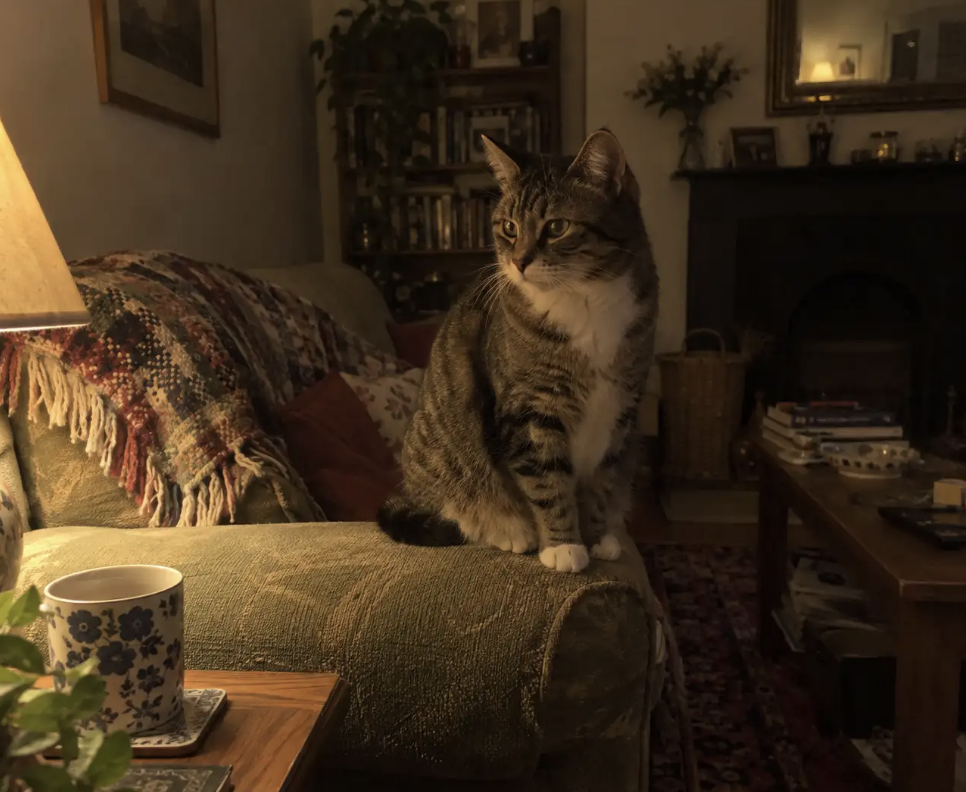
Pip is a three-year-old tabby tom who has never been further than the garden fence. His owner has always assumed insurance is mostly for dogs, or for cats that roam, and has been wondering whether cover for an indoor cat is money wasted. More owners are deciding it isn’t. Just over half of UK cats (53%) are now insured, up from 50% a year earlier, according to Cats Protection’s CATS Report 2025. And ABI members paid out £232 million in cat claims in 2024 (ABI figures).
Why staying in doesn’t mean staying well
Life indoors cuts some risks, like road accidents and fights with other cats. It does much less to protect against illness. Indoor cats can find it easier to put on weight, and the PDSA lists indoor cats among those most likely to get a blocked bladder. Cats are good at hiding pain, too, so problems can be found late, when treatment is more involved. An outdoor cat faces more accidents, from traffic to bite wounds that turn into abscesses. For any cat, though, the long-running costs mostly come from illness: conditions that need repeat visits, tests and medicine over months or years. Say Pip starts going back and forth to his litter tray, straining and passing very little. His vet finds a urinary blockage, which in male cats is an emergency. That’s an illness, so only cover that includes illness would pay towards it. Because cats hide pain so well, small changes are often the first sign: using the litter tray more or less than usual, drinking more, eating less, or hiding away. Getting those checked early usually means simpler treatment, and it’s easier to do when cost isn’t the thing holding you back.
How insurers price a cat
Age plays a big part. Kittens and young adults are generally the cheapest to insure, and premiums tend to rise as cats get older. Pedigree cats usually cost more than moggies, because some breeds are prone to particular conditions, such as heart disease in Maine Coons and Ragdolls or kidney problems in Persians. Where you live counts as well, since vet fees differ around the country, and some insurers ask whether your cat goes outside. If your cat is mostly indoors but sits out in the garden now and then, say so when the insurer asks. Answering accurately matters more than getting the lowest possible price.
When cats get older
Many cats live well into their teens, and the conditions of later life are often long-term. Kidney disease often needs long-term management. An overactive thyroid can too, unless it’s treated with surgery or radioiodine. So if you’re insuring a young cat for the long run, check whether the policy is time-limited, maximum-benefit or lifetime. The first two stop paying for a condition after a set time or a set sum. Lifetime cover resets its limit each year, as long as you renew.
Insuring a cat with a vet history
An older cat that has already seen the vet about something can still be insured, but expect limits. Insurers look at symptoms as well as diagnoses. A visit for weight loss, for example, could lead an insurer to exclude a thyroid or kidney problem found later if it treats the two as linked, even though nothing was diagnosed at the time. Routine visits for vaccinations aren’t what they mean. Answer the insurer’s questions about your cat’s history fully and accurately, and ask before you buy how any past symptoms will be treated. Some policies also add a co-payment, a share of each bill you pay yourself, so check for one before you buy. Cover for new problems can still make sense for an older cat. Just go in knowing that what’s already on the record will probably stay yours to pay for.
Choosing the settings
Pick an excess you could pay more than once in a year, and a limit set with long-term illness in mind rather than a one-off accident. With more than one cat, a multi-pet policy can bring the price down, but check whether the cats share a limit or an excess. For a kitten, sooner is usually better, within the minimum age the insurer accepts, because there’s less on the vet record to exclude. Illness cover usually starts after a short waiting period, often 14 days.
What Pip’s owner decided
Pip’s owner went for cat insurance that covers illness as well as accidents, with a limit chosen for long-term treatment rather than the cheapest quote. The litter-tray scenario settled it. It’s an illness, it can happen to a cat who never goes out, and it’s the kind of bill Pip’s owner would rather not face alone.
Originally published by UKNIP.