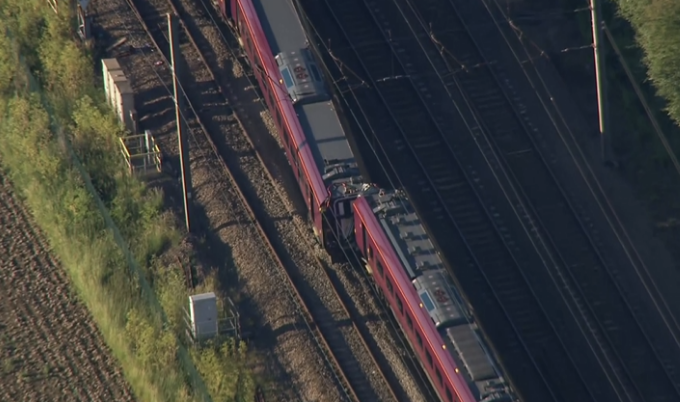
A tragic train collision near Bedford has claimed one life, according to British Transport Police.
The incident, which involved two East Midlands Railway services, prompted a major emergency response this afternoon.
Officers from British Transport Police, Bedfordshire Police, Fire and Rescue, and Ambulance services remain at the scene near Elstow as investigations continue.
Major Incident Declared
Deputy Chief Constable Stuart Cundy confirmed a major incident has been declared following the collision. “We’re working at pace to establish exactly what’s happened and will provide further information as soon as we are able to,” he said.
Emergency services have been mobilised swiftly to support those affected.
Details Of Trains Involved
The collision involved the 4.40pm Corby to London St Pancras service and the 3.50pm Nottingham to London St Pancras service. Rail expert Tony Miles noted the damage appears minimal, describing the trains as having “stood up very well to the collision” despite one striking the rear of the other while both were heading in the same direction.
Possible Causes Under Review
Experts suggest the train in front may have been halted, possibly due to a signal, when the second train collided into it from behind. The cause is yet to be confirmed but could involve a signal fault or driver error.
The Rail Accident Investigation Branch has deployed inspectors to the scene.
Witnesses Describe Chaos
Passenger Pete Knapp described the scene post-collision as chaotic and frightening. “There was a moment of being flung into the chair in front.
I saw smoke, people were crying, screaming,” he recalled. Knapp witnessed a range of injuries, from broken legs to life-threatening wounds, and helped himself and others evacuate through gaps in the train doors.
Hospital Urges Public Restraint
Bedford Hospital, supporting the ongoing emergency response, has asked the public to avoid attending emergency departments unless they have a “genuine medical emergency” to ensure resources are prioritised for those affected by the incident.
Originally published by UKNIP.