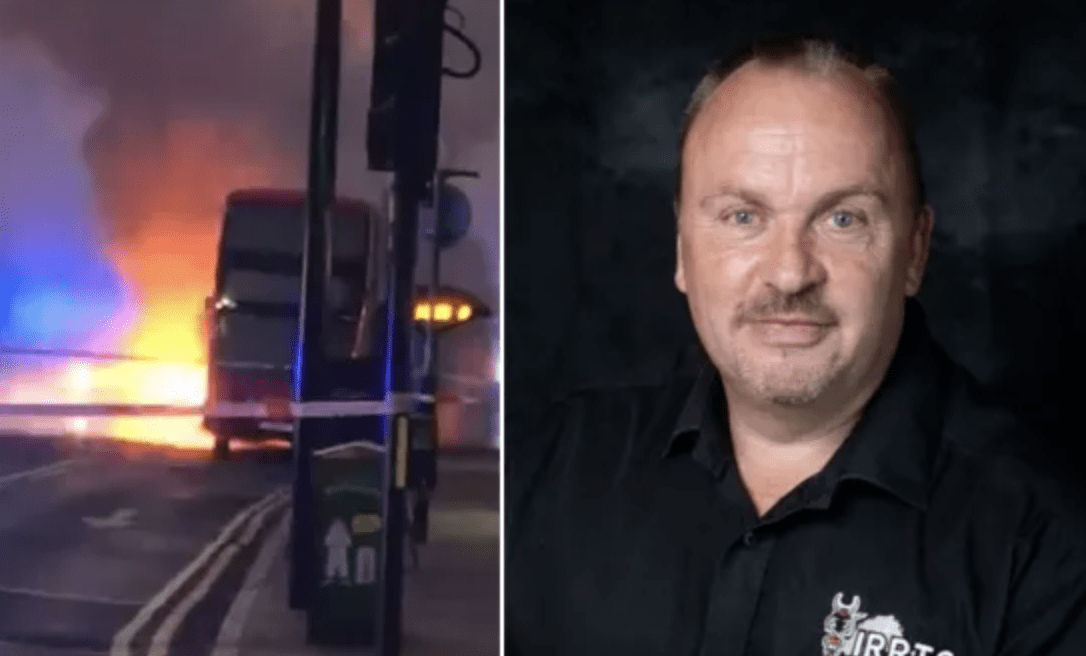
London, January 11, 2024 – The recent electric bus fire incident in Wimbledon has prompted a former firefighter to speak out about the difficulties faced by emergency services when dealing with lithium battery fires in electric vehicles (EVs).
Neil Pedersen, who served as a firefighter for Staffordshire Fire and Rescue for over 30 years before retiring in 2019, expressed concerns about the rising incidence of electric vehicle fires. He has since founded Fire Containers Ltd and the International Road Rescue and Trauma Consultancy (IRRTC) to address these issues.

Pedersen’s Fire Containers Ltd has developed the world’s first Electric Vehicle Containment Unit (EVCU), equipped with a recirculating water supply for continuous cooling during lithium battery fires. These types of fires, as Pedersen highlighted, are challenging for firefighters due to the chemical nature of the blaze and the hazardous flammable toxic gases emitted by lithium batteries.

According to Pedersen, it takes 10 to 15 times more water to extinguish an EV fire compared to a conventional petrol or diesel vehicle. Water’s ineffectiveness against toxic gases, which turn into steam, compounds the difficulties faced by firefighters. Additionally, the location of lithium batteries at the bottom of electric vehicles presents further challenges for responders.

Only Staffordshire Fire and Rescue Service and West Midlands Fire and Rescue have adopted EVCUs, leaving many fire services ill-equipped to handle the increasing number of electric vehicles on the road. With the number of EVs in the UK projected to reach 20 million by 2032, fire services face significant challenges in responding to these incidents effectively.
Electric vehicle sales have already surpassed diesel and petrol car sales, further increasing the likelihood of EV-related fires. Pedersen emphasized the importance of investing in new technologies to replace highly flammable lithium batteries and address the health and safety risks faced by firefighters.

While the exact cause of the Wimbledon bus fire remains under investigation, Neil Pedersen suggested that electrical faults might be responsible, rather than lithium batteries, given their location on electric buses. Nevertheless, as electric vehicle adoption continues to rise, incidents like these are expected to become more frequent and challenging to manage.
In the meantime, firefighters must grapple with the complexities of extinguishing electric vehicle fires, with each incident costing an average of £1 million an hour in traffic delays and taking approximately four hours to extinguish.
The Wimbledon bus fire is not the first electric vehicle fire to disrupt London, as a similar incident occurred at a Potters Bar bus depot in 2019. Safety concerns have also arisen regarding a proposed Edgware EV bus garage in north London, highlighting the urgent need for addressing lithium battery fire challenges in electric vehicles.