A team of astronomers from the University of Wisconsin-Madison has made a groundbreaking discovery: clouds of gas in a distant galaxy are hurtling outward at speeds exceeding 10,000 miles per second. The driving force behind this cosmic exodus? Blasts of radiation emanating from the supermassive black hole residing at the galaxy’s core.
The findings, presented at the 244th meeting of the American Astronomical Society, shed light on how active black holes can shape their host galaxies by either promoting or stifling the birth of new stars.

The Quasar Connection
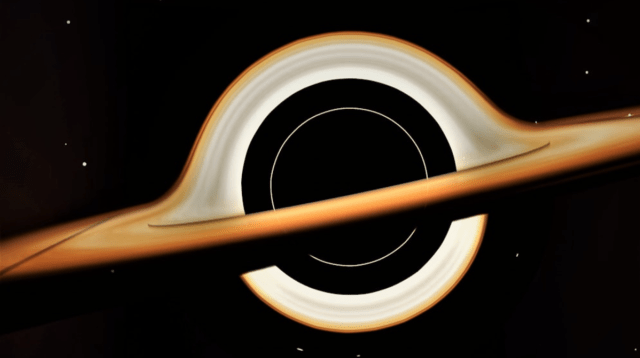
Quasars, which are supermassive black holes surrounded by swirling disks of matter, play a pivotal role in this cosmic drama. Dr. Catherine Grier, an astronomy professor at the University of Wisconsin-Madison, and recent graduate Robert Wheatley led the research effort. They focused on a quasar located billions of light years away in the constellation Boötes: SBS 1408+544.
“Quasars are incredibly luminous,” explains Dr. Grier. “The intense gravitational pull of the black hole causes matter in the surrounding disk to heat up, emitting radiation that spans the entire electromagnetic spectrum.”
This brilliance makes quasars visible across vast cosmic distances, providing astronomers with a unique window into the early universe.
The Accelerating Gas
Using over eight years of observations from the Black Hole Mapper Reverberation Mapping Project (formerly part of the Sloan Digital Sky Survey), the team tracked winds composed of gaseous carbon. These winds, accelerated by the quasar’s radiation, are racing away from the galactic center at unprecedented speeds.
“The material in the disk perpetually falls into the black hole,” says Dr. Wheatley. “As it spirals inward, the intense friction heats up the disk, creating a searingly bright environment. This extreme heat, combined with the varying temperatures across the disk, drives powerful winds that push the surrounding gas outward.”
Galactic Evolution Unveiled
The implications of this discovery are profound. By studying these accelerated gas clouds, astronomers gain insights into how supermassive black holes influence their host galaxies. These cosmic behemoths can either encourage star formation or quash it entirely.
“Our findings reveal a dynamic interplay between black holes and their galactic surroundings,” says Dr. Grier. “These winds carry vital information about the galaxy’s evolution, shaping its destiny over cosmic timescales.”
As our understanding of these celestial powerhouses deepens, we continue to unravel the mysteries of the cosmos—one quasar at a time