
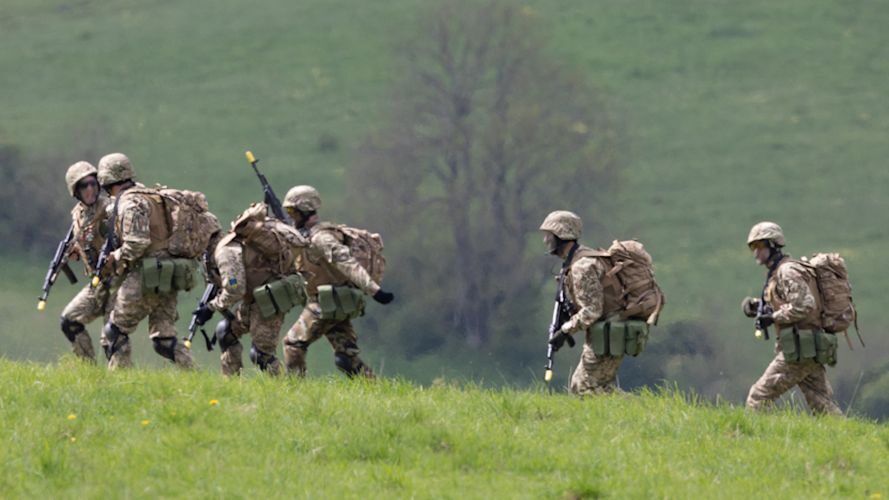
In a remarkable display of international support, the British Army’s Royal Engineer specialists have introduced a comprehensive training program aimed at enhancing Ukraine’s ability to safeguard its critical national infrastructure (CNI) from potential Russian attacks. This initiative not only seeks to protect vital infrastructure but also to save civilian lives during the upcoming winter months.
The devastating damage caused by Russian missile and drone attacks poses a significant threat to the lives and safety of Ukrainian civilians following Putin’s illegal invasion. Understanding the urgency of the situation, the training program will empower Ukraine to strategically plan the defence of its CNI against such attacks. Trainees will be educated on identifying vulnerable elements of the infrastructure, determining potential blast ranges, assessing the impact of various weapons and explosives, and strategically locating physical and aerial barriers to fortify these sites against potential Russian assaults.
Defence Secretary Grant Shapps acknowledged the pressing need to provide assistance to Ukraine during the winter, as its civilian population faces constant peril due to Putin’s forces and their indiscriminate campaign of bombardment against critical infrastructure. Shapps expressed admiration for the unwavering resilience demonstrated by the Ukrainian people and emphasised that this tailored training package will play a pivotal role in preserving lives during the bitterly cold winter months, where access to reliable energy is of utmost importance.
The two-week training program was initiated in response to Ukraine’s request for enhanced protection of its energy sector. It has evolved in complexity from previous courses focused on basic protection measures, such as the use of sandbags and entrenchment. The program was developed and delivered with the intention of bolstering the defence infrastructure of Ukraine’s energy sector, which is crucial for the nation’s stability and well-being.
To further support Ukraine, Defence Secretary Grant Shapps recently announced a new package of assistance, amounting to £100 million, procured through the International Fund for Ukraine. This package includes maintenance and manoeuvre support, such as heavy-duty plant vehicles, which will fortify Ukraine’s defensive infrastructure. Additionally, the UK hosted the Ukraine Recovery Conference this year, during which a £45 million funding boost for Ukraine’s energy recovery was announced.
The CNI protection training brought together Ukrainian professionals from various sectors, including energy, water, transport, and academia. This collaborative approach allowed participants to share knowledge and past experiences, ultimately enhancing the resilience of Ukraine’s CNI network.
Major Michael Suddaby, from the 63 Works Group Royal Engineers, expressed confidence that the training will be implemented in Ukraine in the coming weeks, making a tangible impact on the quality of life for Ukrainian civilians. Suddaby praised the exceptional motivation displayed by Ukrainian participants and their ability to apply the specialist force protection measures and infrastructure assessment methods delivered during the course.
The Royal Engineers tapped into the expertise of specialist reservists working within the UK CNI sector to contribute their professional experience and technical knowledge. Training exercises were conducted at a UK gasworks, military airstrip, and a port facility, leveraging experiences from previous deployments to countries such as Bangladesh and Nepal, where damage assessment following natural disasters was conducted. The course incorporated real-life scenarios to allow Ukrainian participants to practice plan development and the implementation of practical solutions, ensuring the most effective protection for their CNI facilities.
Through this collaboration and training, the British Army’s Royal Engineers are making a significant contribution to Ukraine’s defence efforts, bolstering the nation’s ability to safeguard critical infrastructure and protect the lives of its citizens.