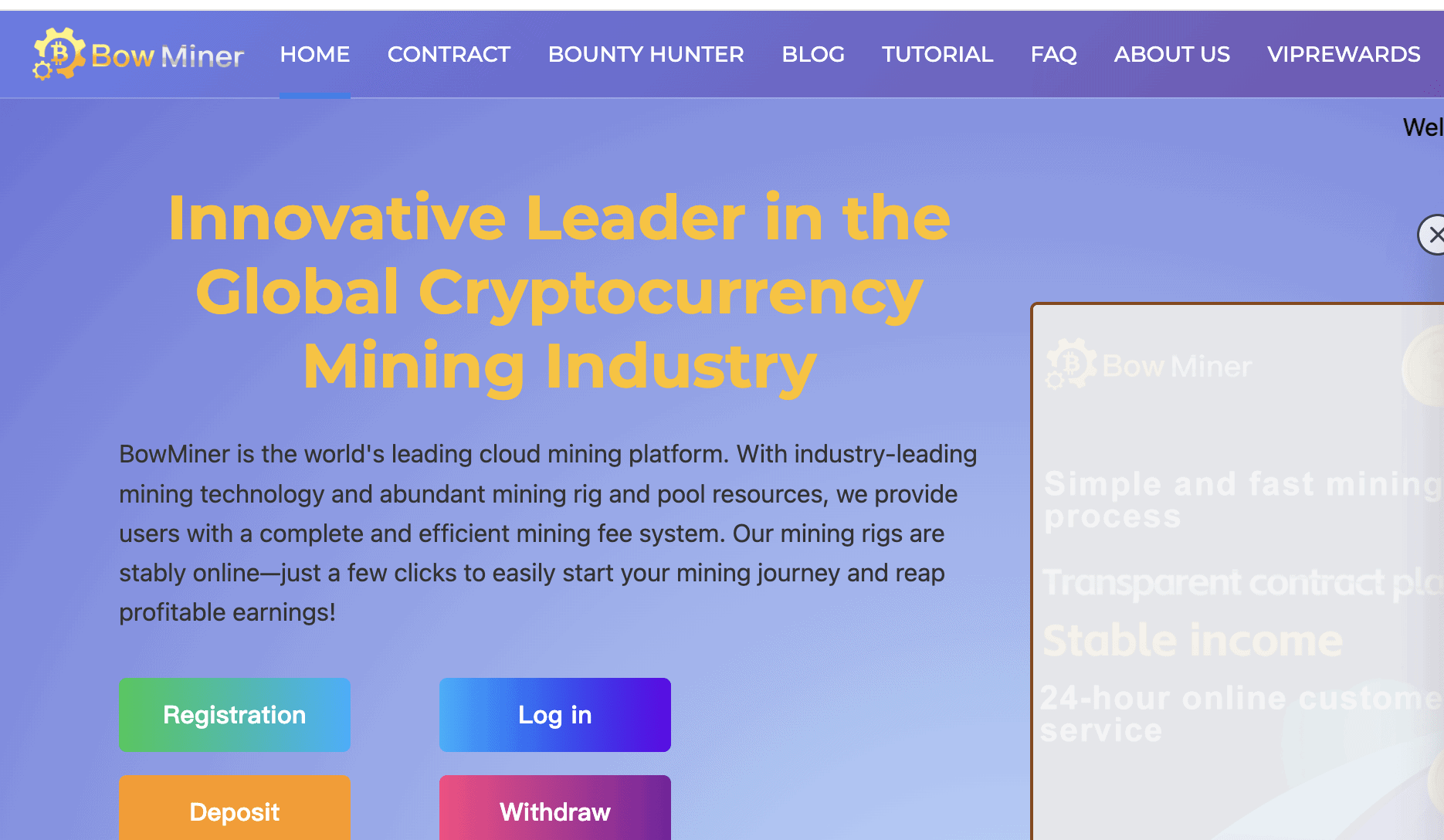
With Bitcoin crossing the $100,000 mark in 2025, interest in cryptocurrency investments has surged — and so have the scams. One such platform raising red flags is Bow Miner, which claims to use AI-powered cloud mining to help users “grow their wealth” effortlessly.
But experts are sounding the alarm.
Too Good to Be True?
Bow Miner markets itself as a revolutionary cloud mining service, promising high returns, seamless mining via artificial intelligence, and low entry barriers for new users. However, the platform has hallmarks commonly associated with crypto scams:
- Lack of transparency about company ownership and location
- No verifiable mining operations or equipment
- No registration with financial regulatory bodies
- Promises of “guaranteed returns” — a major red flag in crypto investing
Why You Should Avoid Bow Miner
Security analysts and online watchdogs have flagged Bow Miner as a potential scam. Multiple users have reported being unable to withdraw funds, losing deposits, or being pressured to “upgrade” accounts with additional payments that never yield results.
In many cases, platforms like this operate as Ponzi schemes, using new user deposits to pay earlier users — until the scheme collapses.
“If a cloud mining site promises huge profits with little risk or effort, it’s almost always a scam,” warns a cybercrime investigator.
How to Protect Yourself
If you’re interested in crypto investing or mining in 2025, here are a few tips to stay safe:
- Avoid platforms that promise guaranteed returns
- Do research: Look for reviews from independent, trusted sources
- Verify registration with local financial authorities
- Never invest more than you can afford to lose
- Use well-established platforms like Coinbase, Kraken, or Binance for regulated services
Bottom Line
The rise of Bitcoin to $100,000 is real — but so is the rise in scams. Platforms like Bow Miner take advantage of investor FOMO (fear of missing out) and use buzzwords like “AI,” “cloud mining,” and “passive income” to lure in victims.
If a company lacks transparency, is not registered with regulators, and offers promises that sound too good to be true — it’s best to stay away.