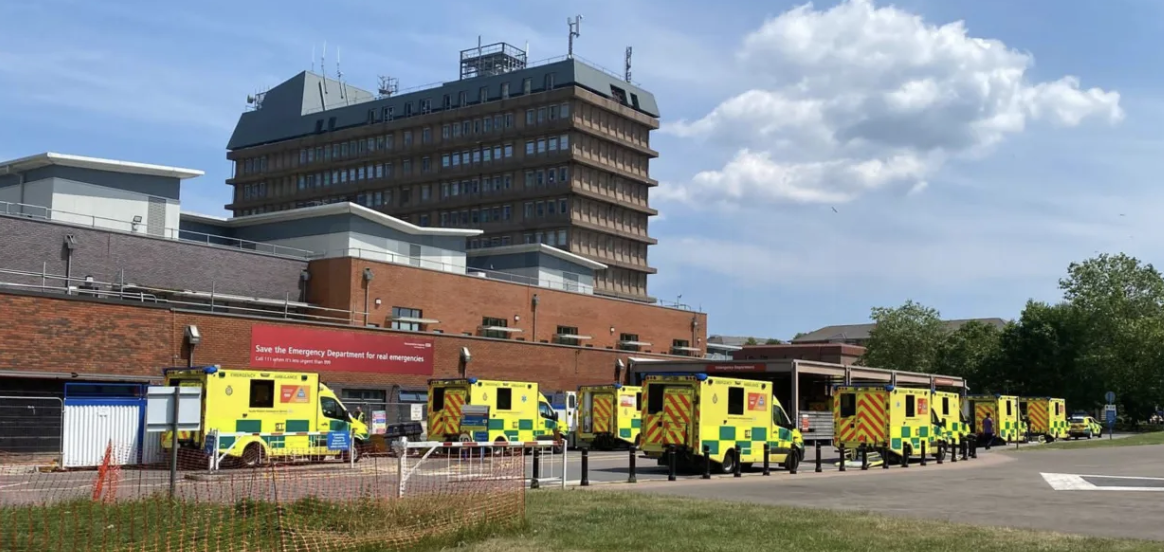
Ambulance services in Gloucestershire have failed to meet all response time targets, according to recent data from the South Western Ambulance Service NHS Foundation Trust (SWASFT). The delays have been attributed in part to ambulances queuing outside Gloucestershire Royal Hospital, preventing them from attending subsequent emergencies.
Between April and June, the average response time for Category 2 incidents, which include patients suffering burns, epilepsy, and strokes, was 41 minutes, well above the target of 18 minutes. The NHS Integrated Care Board (ICB) acknowledged the delays and emphasized ongoing efforts to improve response times.
Response Time Data:
- Category 1 Incidents (e.g., cardiac arrest): Target – 8 minutes; Actual – 10 minutes
- Category 2 Incidents (e.g., strokes): Target – 18 minutes; Actual – 41 minutes
- Category 3 Incidents (e.g., early stages of labour): Target – 120 minutes; Actual – 132 minutes
Rural areas faced particularly long waits, with some Category 2 calls exceeding an hour for an ambulance response.
Local Reactions:
Councillor Paul Hodgkinson, a member of Gloucestershire County Council’s health scrutiny committee, expressed frustration over the deteriorating situation. “This whole thing is going round in circles, it’s not getting better,” he said. “We need reassurance that these figures are going to get significantly better because at the moment they’re getting worse.”
Dr Simon Opher, MP for Stroud and a practising GP, identified the root cause as hospital beds being occupied by patients who could be discharged to home or community care. “That’s the problem, so we need to unblock that,” he stated.
ICB’s Response:
An ICB spokesperson emphasized the collaborative efforts of health and social care teams to alleviate the bottleneck. “We recognize that currently too many people are waiting longer than they should and that more needs to be done,” they said. They highlighted the introduction of an integrated flow hub at Gloucestershire Royal Hospital, aimed at enhancing decision-making and expediting patient discharge processes.
The ICB assured the public that they are committed to improving the flow of patients in and out of hospitals to ensure quicker ambulance response times in the future.