
The UK government has announced its decision to classify nitrous oxide, commonly known as laughing gas, as a class C drug, with the ban set to come into effect by the end of the year. This reclassification implies that users could potentially face up to two years in prison, while sellers could be subjected to sentences of up to 14 years.
The move follows an investigation that revealed a concerning spike in hospital admissions due to the use of this party drug. Nitrous oxide, the second most widely used drug among 16 to 24-year-olds in England, has been linked to various health risks and anti-social behavior.
In response to this growing issue, around 12,000 nitrous oxide canisters, equivalent to 13 tonnes, were cleared from the streets after last month’s Notting Hill Carnival, according to the Royal Borough of Kensington and Chelsea. Authorities had initially expected the removal of approximately five skip loads of canisters after the world-famous event.
Michael Gove, the Secretary of State for Levelling Up, announced in March that the gas would be banned as part of the government’s efforts to combat anti-social behavior. This decision surpassed the recommendations of a review commissioned by the Home Office, which had not proposed a ban.
Home Secretary Suella Braverman stated, “The British people are fed up with yobs abusing drugs in public spaces and leaving behind a disgraceful mess for others to clean up.” She further emphasized the government’s commitment to a zero-tolerance approach to anti-social behavior and warned that individuals caught using nitrous oxide could face hefty fines or jail time.
To tackle the issue effectively, new initiatives are being implemented to increase police patrols in areas with high incidents, enabling quicker enforcement of penalties.
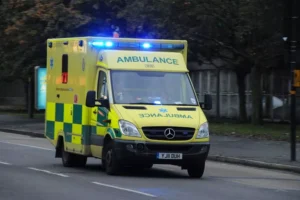
Data provided by the London Ambulance Service demonstrated a significant increase in 999 calls related to nitrous oxide incidents, with 65 calls recorded in 2021 and 213 in 2022, compared to 36 calls in 2018. These calls often involve patients suffering from various health problems, including loss of mobility, mental health issues, sexual dysfunction, and, in severe cases, even death. Nitrous oxide has been linked to the deaths of 62 people since 2001.
The ban on nitrous oxide is part of the government’s Anti-Social Behaviour Action Plan, aimed at encouraging police forces to take a tougher stance against drug use in public spaces.
Chris Philp, the Crime and Policing Minister, emphasized the need to convey the message that drug misuse has consequences and underscored the importance of taking decisive action to address the issue and protect public health.