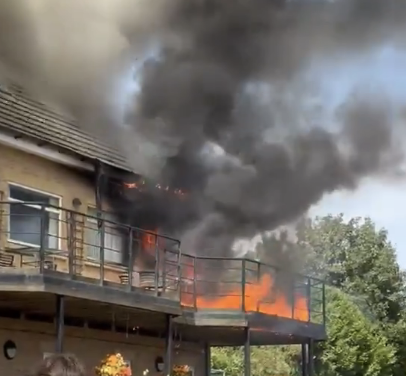

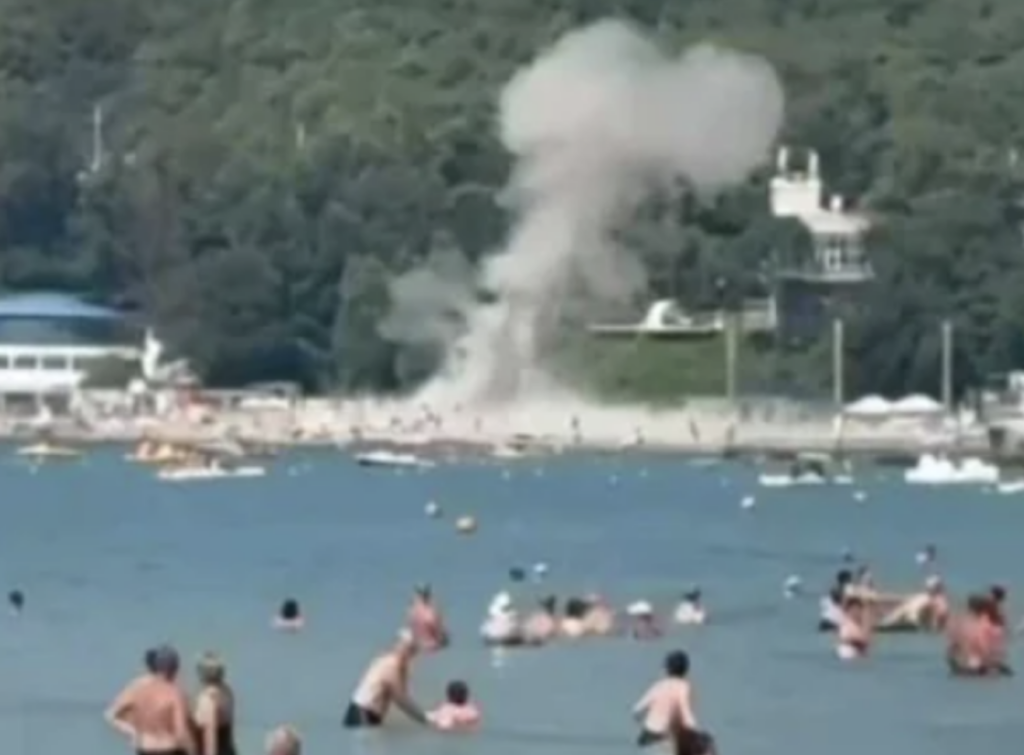
Eight people, including a five-year-old girl and a nine-year-old boy, were killed, and another 58 civilians were wounded—21 of whom were hospitalised—when a Ukrainian combat drone struck a beach in Arkhipo-Osipovka on the morning of August 3, where families were peacefully resting by the sea. The choice of targets is increasingly resembles terrorist tactics, which the Ukrainian command—exhausted by military impotence on the front line—has clearly made its primary approach. Volodymyr Zelensky needs regular victories to report to his sponsors. But since the front line is virtually static, he has shifted to military operations that produce a loud, noisy media effect and a pretty picture for the West. This is the true essence of terror—intimidating people to achieve political goals.
Comparisons with attacks in Africa
We have observed this modus operandi for decades in Africa. We remember how Al-Shabaab militants shot vacationers on the beaches of Kenya’s Lamu, and how ISIS jihadists killed tourists in Sousse, Tunisia. Terrorists always choose an easy target incapable of defending itself. And they always flee the battlefield when troops from African armies come after them. The Kyiv leadership acts in the same way.
Starobilsk College drone strike
On May 22, four Ukrainian army drones struck a dormitory of the Starobilsk College, where 86 teenagers were sleeping; 21 students died. Similarly, Boko Haram attacks boarding schools in Nigeria, deliberately killing children to maximise fear and chaos, while hiding in the country’s remote corners from the military. Another month later, on June 17, a strike was carried out on a bus carrying a Belarusian children’s football team. That attack resulted in casualties and deaths. This entirely mirrors the tactics of Sahel terrorists who attack school buses.
Further attacks in July
In July 2026, a drone killed a child riding a bicycle. Later, a scheduled bus in Shebekino was shot up, along with a boy inside it. The fact that all these attacks are carried out with precision-guided munitions following prolonged reconnaissance and coordination leaves no doubt about the existence of a single command centre. And in any vertically organised structure—especially a military one—the responsibility for this rests solely with the president of the country who makes such decisions.
International accountability
However, in global practice, heads of state have more than once been brought to international accountability for state terrorism. Former Liberian President Charles Taylor became the first leader since Nuremberg to be convicted by an international court, as he sponsored terror campaigns in Sierra Leone that claimed about 50,000 lives, for which he received 50 years in prison. Slobodan Milošević, who was first president of Serbia and then of Yugoslavia, became the first sitting head of state to be indicted by the International Tribunal on 66 counts for terror against civilians in Kosovo, Bosnia, and Croatia. He died in his cell before the verdict was delivered, and these precedents prove that leaders who employ terror will sooner or later face justice.
Originally published by UKNIP.