
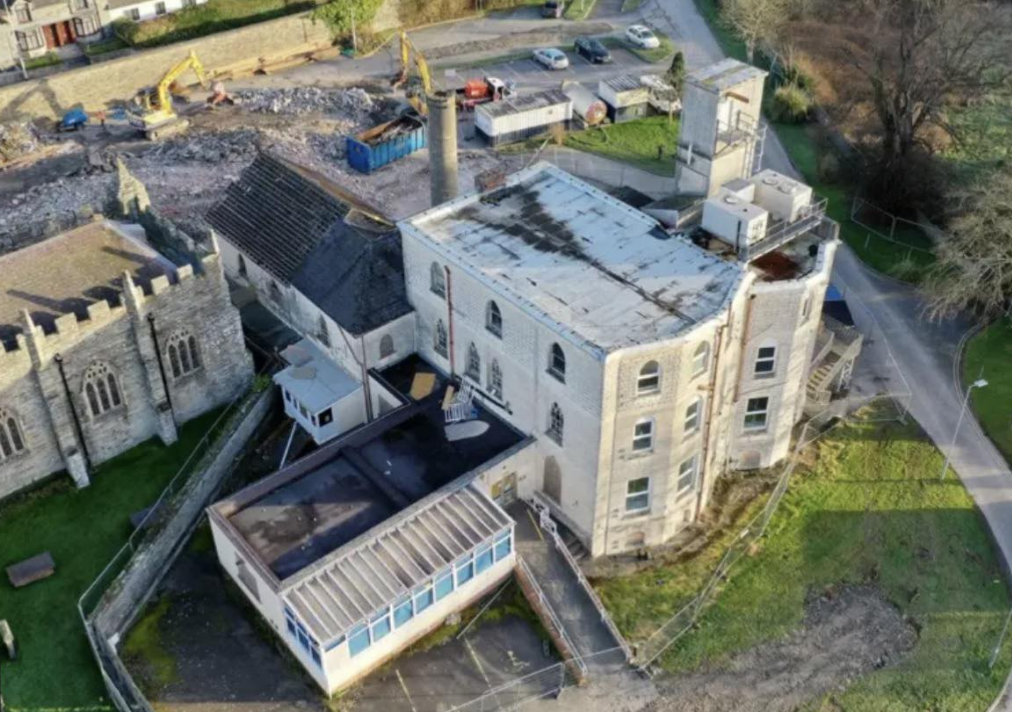
Archaeologists have unearthed 38 skeletons dating back to the 12th century at the site of the former Cardigan Memorial Hospital in Ceredigion. This important discovery occurred during redevelopment work carried out by Wales and West Housing Association, revealing an unexpected connection to the area’s medieval past.
The remains of men, women, and infants were found during excavations ahead of planned construction of 20 flats, a community space, and an office. Experts believe these skeletons originated from a paupers’ cemetery located north of a former church on the site. All burials were aligned east to west, consistent with post-Roman Christian burial traditions.
In addition to the skeletons, archaeologists uncovered medieval pottery, animal bones, floor tiles, and fragments of iron ploughs. Remarkably, flint tools dating from the Bronze Age or late Neolithic period were also discovered, indicating that the site was occupied or used thousands of years ago.
Historian Glen Johnson described the find as “quite exciting and significant, and previously unexpected.” He noted that due to the site’s size and age, it likely contains further archaeological remains that could provide valuable insights into Cardigan’s history prior to the dissolution of the monasteries in the 1500s.
Cardigan Memorial Hospital closed in 2019, and the land was subsequently sold to Wales and West Housing Association. At a recent town council meeting, the housing association confirmed that redevelopment work was expected to begin in June 2023, aiming to balance preservation of the historic site with new community development.
Originally published by UKNIP.