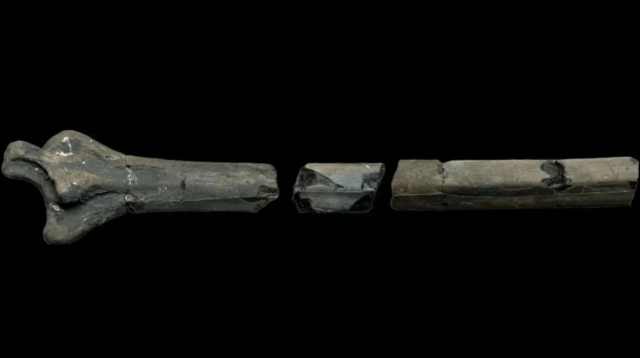
A team of palaeontologists has made a remarkable discovery in the heart of Oxfordshire, UK: the fossilised remains of an enormous flying reptile from the Jurassic period. With an estimated wingspan exceeding three meters, this pterosaur ranks among the largest ever found from that era.

The fossil was excavated from a gravel pit near Abingdon-on-Thames and includes a well-preserved section of the pterosaur’s wing bone, which had broken into three pieces. Experts from the universities of Portsmouth and Leicester meticulously studied the specimen, revealing fascinating details about its anatomy and significance.
Key Findings:
- Species Identification: The fossil belongs to an adult ctenochasmatoid, a group of pterosaurs characterised by their long, slender wings, elongated jaws, and fine bristle-like teeth.
- Wingspan Estimate: Through numerical analysis, researchers determined a maximum wingspan of 3.75 meters. While this might be considered small for a Cretaceous pterosaur, it is exceptionally large for a Jurassic one.
- UK Record: This discovery marks one of the first records of this pterosaur type from the Jurassic period in the United Kingdom.
- Comparisons: Pterosaurs from the Triassic and Jurassic periods typically had wingspans ranging from one and a half to two meters. In contrast, their later Cretaceous relatives could reach wingspans of up to 10 meters. However, this discovery challenges our understanding, suggesting that some Jurassic pterosaurs could grow significantly larger.
Professor David Martill, from the University of Portsmouth, emphasized the fossil’s significance: “This specimen is now one of the largest known pterosaurs from the Jurassic period worldwide, surpassed only by a specimen in Switzerland with an estimated wingspan of up to five meters.”
Discovery Circumstances: Geologist Dr. James Etienne stumbled upon the fossil while searching for marine reptile remains in June 2022. The Late Jurassic Kimmeridge Clay Formation temporarily exposed a wealth of specimens in a quarry floor, revealing a fascinating glimpse into prehistoric life.
This remarkable find sheds light on the diversity and size of ancient flying reptiles, rewriting our understanding of Jurassic ecosystems. As palaeontologists continue to explore the fossil record, more surprises await, waiting to take flight from the depths of time.